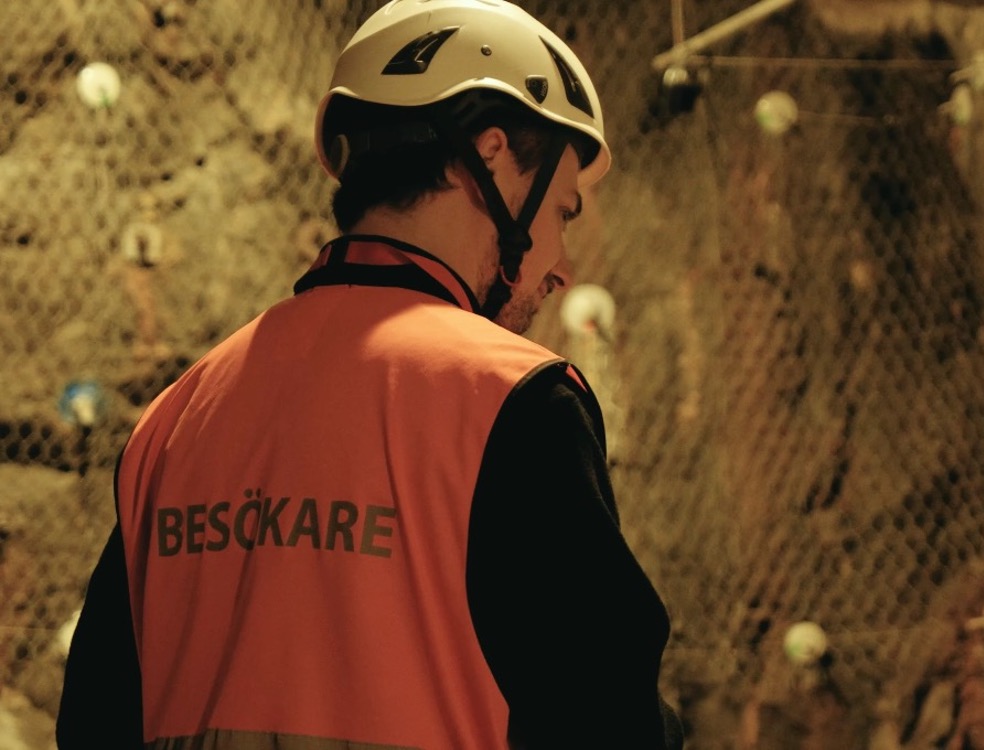
Thomas Keating is a researcher in Technology and Social Change at Linköping University in Sweden who examines relationships between technology, speculative thinking, and time, especially in relation to the long-term management and governance of nuclear waste. He engages critically with plans for the burial of nuclear waste across distant future time horizons, how technologies modify thought and experience, and how speculative thinking can open alternative ways of engaging with social, material, and ecological problems.
He holds a PhD in Human Geography from the University of Bristol (UK). Prior to joining Linköping University, he was a Lecturer in Geography at UNSW Canberra (Australia). He has also held teaching positions at Swansea University (UK), the European School Brussels (Belgium), and the University of Bristol. My research is organised around three interconnected areas. See research projects for current work.
Nuclear Futures
In recent projects he focusses on the management of highly radioactive nuclear waste - spent nuclear fuel - over multi-millennial temporal horizons. This work examines how societies design, communicate, and maintain infrastructures intended to endure far beyond contemporary institutional timescales.
Key questions include how information about nuclear waste repositories can be communicated to future generations; how accountability for the stewardship of “final” repositories is distributed across human and non-human actors; and how political and civil society groups can effectively oversee the technical systems and organisational practices developed to secure these sites over the long term.
Speculative Thinking
His research develops approaches to speculative thinking informed by continental philosophy, including the work of Isabelle Stengers, Didier Debaise, Gilles Deleuze, and Bruno Latour, alongside developments in cultural geography such as non-representational theory, new materialism, and posthumanism.
Within this context, speculative thinking concerns the problem of rethinking what counts as the empirical field. It involves experimenting with concepts capable of engaging with manners of experience that exceed the representational limits of the embodied individual. In this sense, speculative thinking becomes a way of exploring how experience might be articulated beyond the conventions of the phenomenological subject.
Technologies
His work on technology contributes to debates in social theory and human geography, especially through an engagement with the philosophy of Gilbert Simondon. It advances an ontogenetic approach in which technologies are understood not simply as extensions of human capacities, but as processes of individuation informed by their own operational logics.
From this perspective, technologies are constituted through non-human processes that cannot be reduced to organic evolution or human intention. One implication of this approach is a rethinking of thought and subjectivity in relation to material infrastructures, where forms of cognition and agency emerge through assemblages that exceed the bounds and logics of individuated things.